
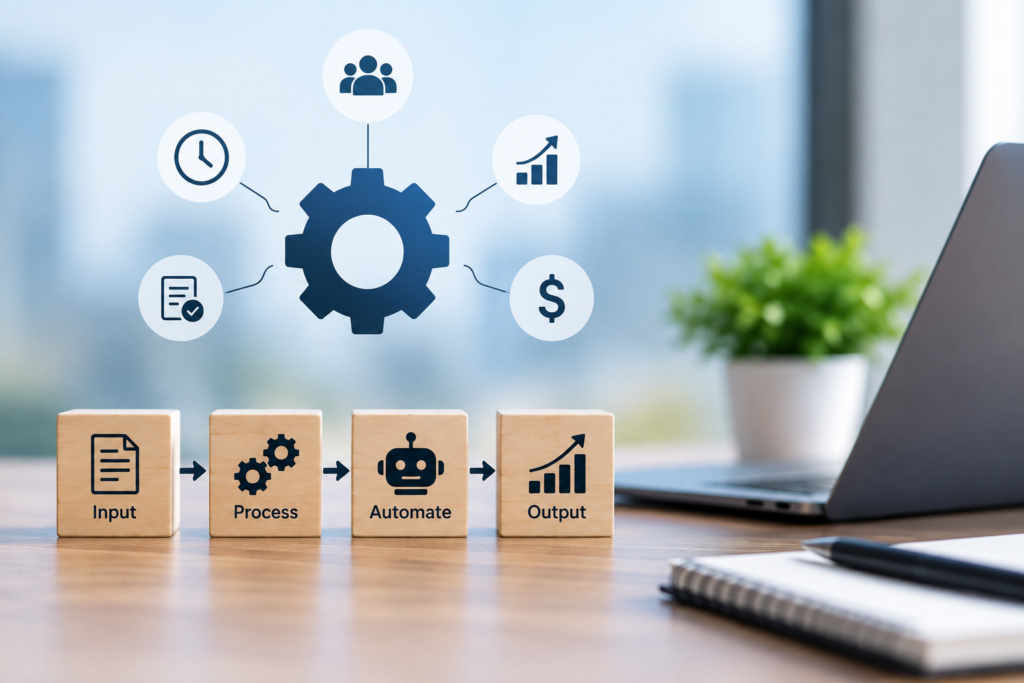
As businesses strive to do more with fewer resources, automation has emerged as a powerful tool for improving operational efficiency. By automating repetitive and time-consuming tasks, organizations can streamline workflows, reduce costs, and empower employees to focus on strategic initiatives.
Business automation involves using technology to perform routine processes with minimal human intervention. Automation solutions can handle tasks such as data entry, approvals, reporting, customer communication, inventory management, and workflow coordination.
Many organizations still rely on manual processes that consume valuable employee time. Automation eliminates repetitive tasks, allowing teams to focus on activities that require creativity, critical thinking, and decision-making.
For example, automated workflows can route approvals, generate reports, and process transactions without manual intervention.
Human errors can lead to costly mistakes, delays, and compliance issues. Automated systems perform tasks consistently and accurately, reducing the risk of errors while improving overall reliability.
This is particularly important in industries that require strict compliance and detailed record-keeping.
Automation significantly reduces the time required to complete routine activities. Tasks that previously took hours or days can often be completed within minutes, enabling faster decision-making and improved customer service.
Organizations benefit from shorter processing times and increased operational agility.
When employees spend less time on repetitive administrative tasks, they can focus on strategic projects, customer engagement, innovation, and business growth initiatives.
Automation supports a more productive workforce by eliminating unnecessary bottlenecks.
Automated systems can collect, process, and analyze data in real time, providing leaders with accurate information for decision-making. Real-time visibility into operations enables organizations to respond quickly to opportunities and challenges.
As businesses grow, manual processes often become difficult to manage. Automation enables organizations to scale operations without proportionally increasing staffing requirements, making growth more sustainable and cost-effective.
Automation is transforming the way organizations operate. By reducing manual work, improving accuracy, accelerating processes, and enhancing productivity, automation enables businesses to achieve greater efficiency and competitiveness. Organizations that invest in automation today are better equipped to adapt, scale, and thrive in an increasingly digital business environment.